Broken Jaw After Accident: Symptoms & First Steps in Chennai
Need expert consultation? Book an appointment with Dr. Pradeep S. or Dr. Kalpa Pandya.
Book AppointmentRoad traffic accidents, sports injuries, and accidental falls are among the leading causes of facial trauma in Chennai. When a high-impact force hits the face, the lower jaw (mandible) or the upper jaw (maxilla) often bears the brunt of the impact. Because the mandible is a prominent, U-shaped bone, it is one of the most frequently fractured bones in the human face.
Recognizing broken jaw after accident symptoms and first steps can prevent life-threatening complications, preserve your facial structure, and ensure your teeth align correctly after healing. If you or a loved one has experienced a facial impact, understanding what to look for and how to respond in the golden hour is vital.
In our practice at Mouth Cancer Surgeons, Chennai, we frequently treat patients presenting with complex maxillofacial injuries. Dr. Pradeep S. and Dr. Kalpa Pandya deliver a coordinated, dual-surgeon approach to facial reconstruction, ensuring that emergency cases at Apollo Main Hospital, Greams Road, receive precise surgical care and comprehensive post-operative rehabilitation.
Understanding Jaw Anatomy and Trauma Biomechanics
The human jaw consists of two main parts: the maxilla (upper jaw), which is fixed to the skull, and the mandible (lower jaw), which is a mobile bone connected to the skull via the temporomandibular joints (TMJ) located just in front of the ears.
Because of its U-shaped architecture, the mandible behaves much like a ring of bone. When force is applied to one side of a ring, it frequently breaks in more than one place. For instance, a direct blow to the chin often results in a fracture at the site of impact (the symphysis or parasymphysis) as well as an indirect fracture near the joint on the opposite side (the condyle).
Maxillofacial trauma requires the specialized expertise of oral and maxillofacial surgeons rather than general orthopedicians. This is because treating a jaw fracture is not just about aligning the bone; it is about restoring the "occlusion"—the precise, millimeter-perfect way your upper and lower teeth meet. Even a tiny misalignment of one millimeter can lead to chronic pain, chewing difficulties, and long-term joint degeneration.
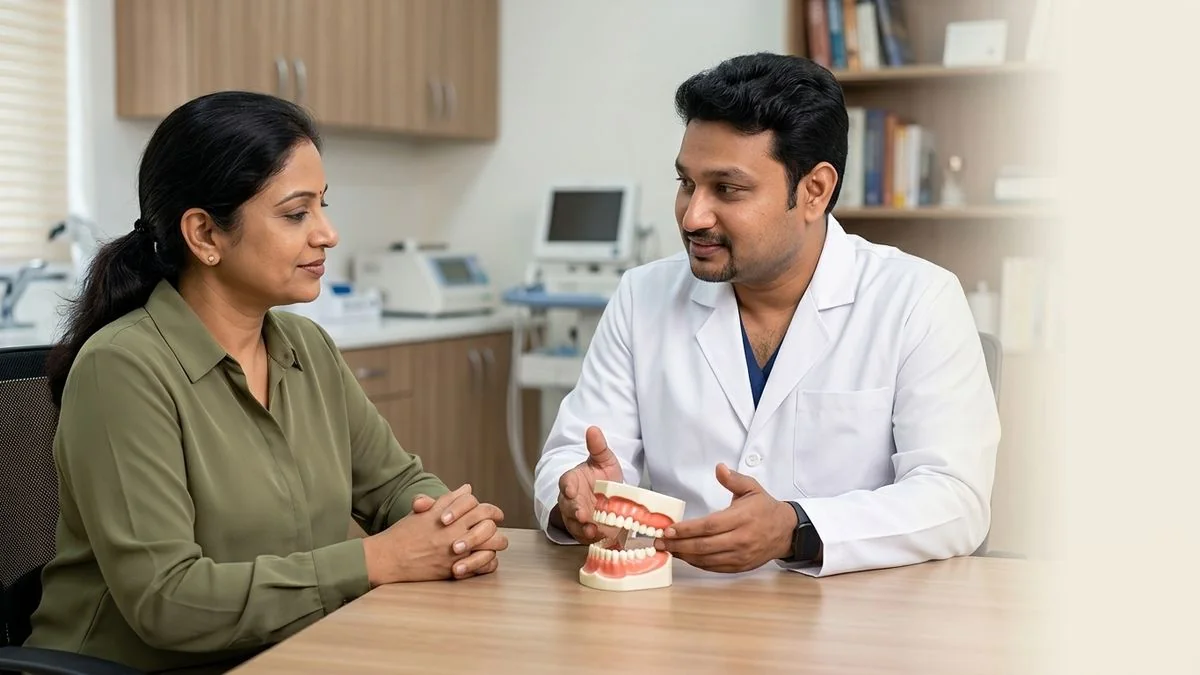
Broken Jaw After Accident Symptoms: Red Flags to Watch For
Following a motor vehicle collision or a hard fall, swelling and bruising can mask the structural damage underneath. If you suspect a jaw fracture, look for these key symptoms:
1. Change in Your Bite (Malocclusion)
This is the most common and definitive sign of a broken jaw. Patients often describe that "my teeth do not fit together anymore" or "my bite feels completely off." You may notice that only your back teeth touch while the front teeth remain apart (anterior open bite), or the jaw may shift visibly to one side when you try to close your mouth.
2. Severe Pain and Tenderness
Pain is immediate and intensifies with any movement of the jaw, such as speaking, swallowing, or attempting to open the mouth. The pain is usually localized over the fracture line or near the ear (if the condyle is fractured).
3. Limited Mouth Opening (Trismus)
A healthy adult can typically open their mouth wide enough to fit three fingers vertically between their front teeth. If a fracture is present, muscle spasms, pain, and mechanical bone interference will severely restrict mouth opening, often allowing only a finger's width of space.
4. Numbness in the Lip or Chin (Paresthesia)
The inferior alveolar nerve runs directly through a canal inside the lower jawbone, providing sensation to your lower teeth, lower lip, and chin. When the bone fractures and shifts, this nerve can become compressed or stretched. If you feel a "pins and needles" sensation or complete numbness in your lower lip and chin after an accident, it is a strong indicator of a displaced mandible fracture.
5. Bleeding and Bruising Under the Tongue
If the fracture line extends through the tooth-bearing area of the jaw, it often tears the overlying gums. This leads to bleeding from the gaps between teeth. Additionally, a dark purple bruise forming under the tongue on the floor of the mouth (known clinically as sublingual ecchymosis or Cole's sign) is a classic indicator of a mandibular body or symphysis fracture.
6. Loose, Damaged, or Missing Teeth
The force required to break a jaw bone often damages the dentition. You may notice multiple loose teeth, fractured crowns, or teeth that appear stepped or misaligned compared to their neighbors.
Mandible Fracture First Aid: Critical First Steps
If you suspect someone has sustained a jaw fracture in an accident, taking the correct initial actions can prevent airway obstruction and minimize further tissue damage.
Step 1: Assess and Secure the Airway
The most critical risk with a severe jaw fracture—especially bilateral fractures of the front of the jaw—is that the tongue loses its bony support and can fall backward, blocking the airway.
-
Action: Keep the injured person sitting upright and leaning slightly forward. This allows blood, saliva, and any broken tooth fragments to drain out of the mouth rather than pooling in the throat.
-
Never: Allow a person with a suspected jaw fracture to lie flat on their back unless spinal injury precautions require it, in which case their head must be carefully monitored and suctioned if needed.
Step 2: Control Bleeding
- Action: Gently apply direct pressure to any bleeding facial wounds using a clean cloth or sterile gauze. If bleeding is coming from inside the mouth, have the patient spit it out gently rather than swallowing it, as swallowed blood can cause vomiting.
Step 3: Support and Stabilize the Jaw
-
Action: You can provide temporary stabilization by wrapping a soft bandage, scarf, or elastic wrap gently under the chin and over the top of the head (a Barton-style bandage). This cradles the jaw and limits painful movement.
-
Warning: Do not tie this bandage too tightly. If the patient needs to vomit or if their airway becomes compromised, they must be able to open their mouth or remove the wrap instantly.
Step 4: Apply Cold Compresses
- Action: Apply ice packs wrapped in a cloth to the sides of the face for 10 to 15 minutes at a time. This helps control the rapid onset of post-traumatic swelling and provides a mild numbing effect.
Step 5: Seek Immediate Emergency Care
- Action: Transport the patient immediately to a well-equipped tertiary hospital emergency department. In Chennai, the emergency department at Apollo Main Hospital, Greams Road, is fully staffed and equipped to handle acute maxillofacial trauma, with direct on-call access to our maxillofacial surgery team.
How Maxillofacial Surgeons Diagnose a Broken Jaw
Upon arrival at the hospital, our first priority is to stabilize your general systemic condition. Once any life-threatening injuries are ruled out or managed, we perform a detailed maxillofacial evaluation.
+------------------------------------------------------------------------+

|                      ACUTE FACIAL TRAUMA FLOW                          |

+------------------------------------------------------------------------+

                                    |

                                    v

                       [ 1. Airway & Stabilization ]

                   Ensure clear breathing; stop bleeding.

                                    |

                                    v

                       [ 2. Clinical Assessment ]

                 Check occlusion, nerve function, trismus.

                                    |

                                    v

                      [ 3. Diagnostic Imaging ]

                    OPG X-ray or 3D Facial CT Scan.

                                    |

                                    v

                     [ 4. Treatment Selection ]

                 Conservative, MMF (wiring), or ORIF.
Clinical Examination
Dr. Kalpa Pandya or Dr. Pradeep S. will gently palpate your facial bones to check for step-offs (abrupt shifts in the bone contour), localized tenderness, and abnormal movement. We will examine your bite, look for gum tears, assess the mobility of individual dental segments, and test the sensation of your lower lip.
Imaging Protocol
Plain X-rays are helpful, but modern maxillofacial surgery relies on advanced imaging for precise surgical planning:
-
Orthopantomogram (OPG): A panoramic X-ray of the jaws that provides a clear, two-dimensional view of the entire mandible, including the joints.
-
3D CT Scan of the Facial Bones: For complex, comminuted (shattered), or multiple fractures, a high-resolution CT scan with three-dimensional reconstruction is the gold standard. This allows us to visualize the fracture fragments from every angle and plan the exact placement of surgical plates.
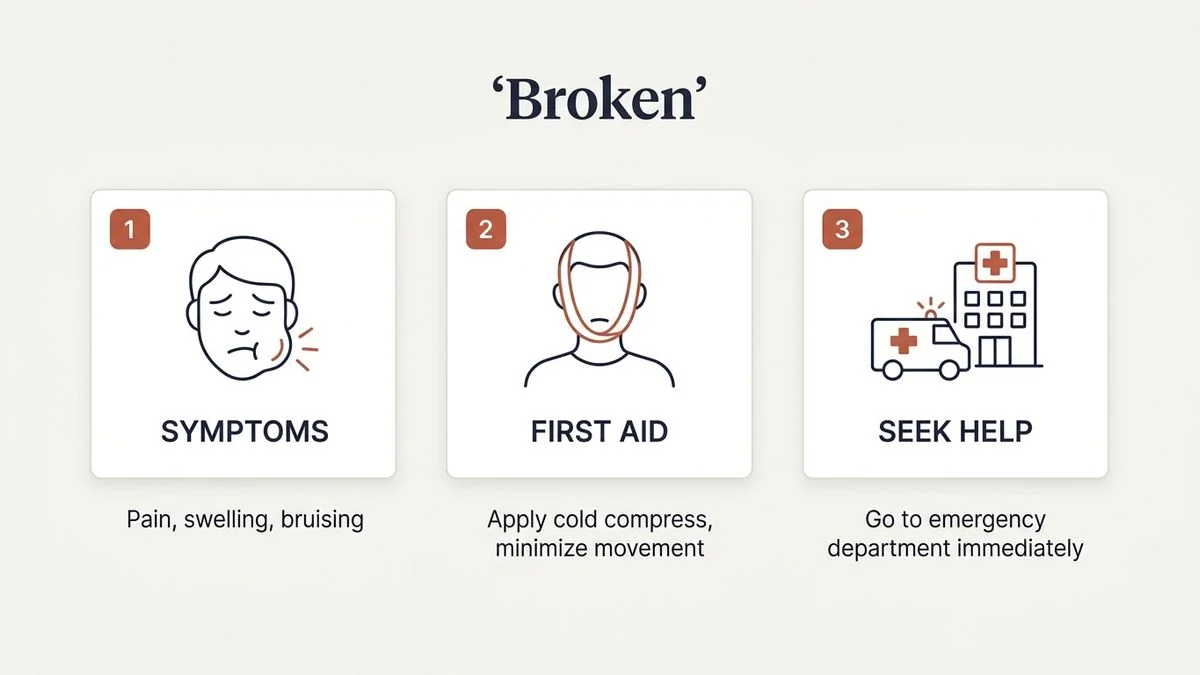
How Is a Broken Jaw Treated?
The goal is always the same: realign the bone, restore your normal bite, and let it heal — but how depends on the fracture:
-
Undisplaced fracture (bone cracked but not shifted): may heal without surgery, with a soft diet and close monitoring.
-
Simple displaced fracture: the jaw can be realigned and held with temporary wiring (maxillomandibular fixation).
-
Displaced, unstable or multiple fractures: the modern standard is ORIF facial fracture surgery — the bones are realigned and fixed with small titanium plates (usually through incisions inside the mouth, so no visible scars), letting you return to function faster.
Your full treatment plan is decided after imaging. You can read how we approach these injuries on our facial trauma page.
What to Expect During Recovery and Post-Operative Care
Healing from a jaw fracture is a gradual process that spans several weeks. Your active participation in post-operative care is crucial for an optimal outcome.
Diet and Nutrition
Whether your jaw is wired shut or stabilized with plates, your chewing capacity will be severely restricted.
-
Weeks 1 to 2: A purely liquid diet rich in proteins and calories (smoothies, strained soups, protein shakes, milkshakes, and dal water).
-
Weeks 3 to 6: Transition to a soft, non-chew diet (mashed potatoes, curd rice, well-cooked khichdi, scrambled eggs, and pureed vegetables).
-
Avoid: Any hard, crunchy, or chewy foods (nuts, raw vegetables, tough meats) for at least 8 weeks, as chewing forces can bend or break the healing bone and titanium plates.
Meticulous Oral Hygiene
When you cannot brush your teeth normally, plaque and bacteria accumulate rapidly, increasing the risk of wound infection.
-
Use a soft-bristled baby toothbrush to gently clean the accessible surfaces of your teeth.
-
Rinse your mouth gently with a prescribed chlorhexidine mouthwash or warm salt water after every meal to keep the surgical sites clean.
-
Avoid using high-pressure water flossers near the incision lines during the first few weeks.
Activity Restrictions
-
Avoid strenuous exercise, heavy lifting, and any activities that increase blood pressure for the first two weeks.
-
Contact sports, cycling, or any activity with a risk of secondary facial impact must be avoided for at least 3 months.
Why You Shouldn't Delay Treatment
Ignoring or delaying treatment for a broken jaw can cause lasting problems:
-
Malunion / non-union — the bone heals crooked or fails to fuse, permanently changing your bite and facial shape.
-
Chronic TMJ problems — a misaligned jaw overloads the joints, leading to ongoing pain and stiffness that may need TMJ care.
-
Infection — an exposed fracture line can develop a deep bone infection.
-
Permanent numbness — pressure on the jaw nerve can make temporary numbness in the lip/chin permanent.
Talk to a Specialist in Chennai
A suspected broken jaw is a time-sensitive injury — prompt, precise treatment protects your bite, facial shape and nerves. At Mouth Cancer Surgeons, Dr. Pradeep S. and Dr. Kalpa Pandya jointly manage facial trauma at Apollo Main Hospital, Greams Road, Chennai, and can also restore lost teeth with dental implants once you've healed.
After a facial injury, get assessed without delay. Book an appointment or call us.
References
-
Fonseca, Raymond J., et al. Oral and Maxillofacial Trauma. 5th ed., Elsevier, 2019.
-
Miloro, Michael, et al. Peterson's Principles of Oral and Maxillofacial Surgery. 3rd ed., Springer, 2011.
-
Al-Khateeb, T. H., and Abdullah, F. M. "Mandibular Fractures in Northern Jordan: A Comparative Study of Etiology and Patterns." Journal of Oral and Maxillofacial Surgery, vol. 65, no. 10, 2007, pp. 2002–2007.
-
Boffano, Paolo, et al. "European Maxillofacial Trauma (EURAMAX) Project: A Multicenter Reconstruction of Epidemiology and Patterns of Maxillofacial Trauma." Journal of Cranio-Maxillofacial Surgery, vol. 43, no. 5, 2015, pp. 575–582.
-
National Institutes of Health. "Management of Mandibular Fractures: A Review of Current Protocols." PubMed Central, 2021.
Next step
Concerned about a symptom you read here? Get a specialist opinion in Chennai.
Dr. Pradeep S. and Dr. Kalpa Pandya consult at Apollo Hospitals, Greams Road. Same-day responses on WhatsApp for most enquiries.

Dr. Pradeep S.
MDS (OMFS) · FHNS · FIBCSOMS

Dr. Kalpa Pandya
MDS (OMFS) · FHNS — Head & Neck Oncology
Authored by
Medically reviewed by