Oral cavity cancer is our core focus. From the first screening to definitive surgery and recovery, both surgeons plan and operate together so total tumour clearance is achieved with the best possible function preserved.
Oral cancer can start anywhere in the mouth, and where it starts changes how we operate. The tongue and the inner cheek (buccal mucosa) are by far the most common sites we see in Chennai — largely because of tobacco, gutka and areca-nut use. These are the sites we treat:
Oral Cancer Treatment in Chennai: Comprehensive Care
If you have been told you have oral cancer — or you are waiting on a biopsy and fearing the worst — the questions are usually the same. How bad is it? Will I need surgery? Will I be able to eat and speak afterwards? This page sets out how we answer those questions, and what treatment with us actually involves.
Oral cancer (mouth cancer) covers malignancies anywhere in the oral cavity: the tongue, buccal mucosa, gingivobuccal sulcus, floor of mouth, alveolus, palate, retromolar trigone and lips, as well as verrucous carcinoma, minor salivary gland cancers and oral melanoma — our guide to the types of oral cancer explains how these differ. Treating it well means getting three things right — an accurate diagnosis, complete surgical removal, and reconstruction that gives you back function and appearance.
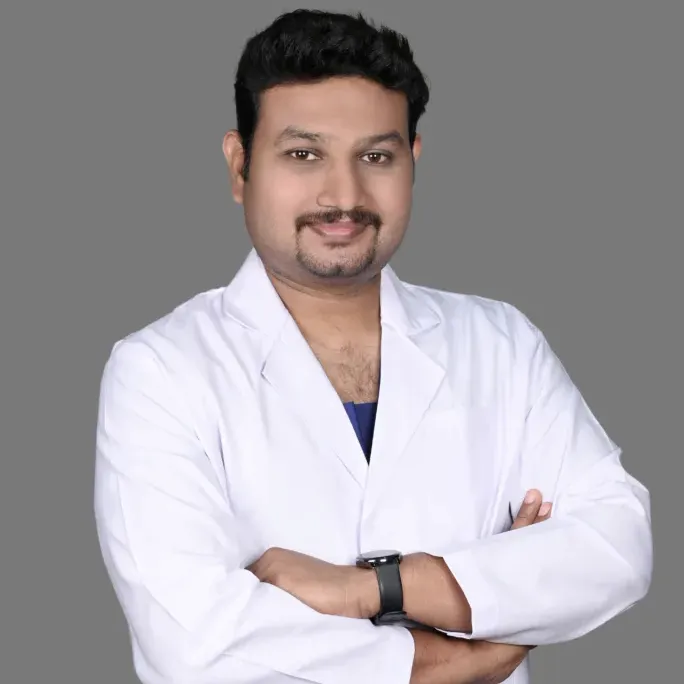
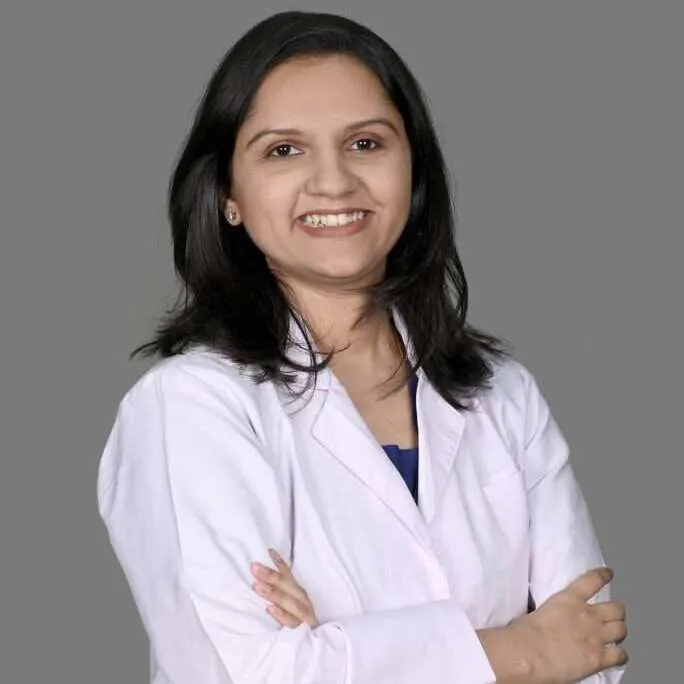
You are cared for by the same two surgeons from the first screening through to long-term follow-up. Dr. Pradeep S. and Dr. Kalpa Pandya plan and operate together, so nothing is handed off between teams at the point it matters most.
Oral Cancer Screening and Risk Assessment
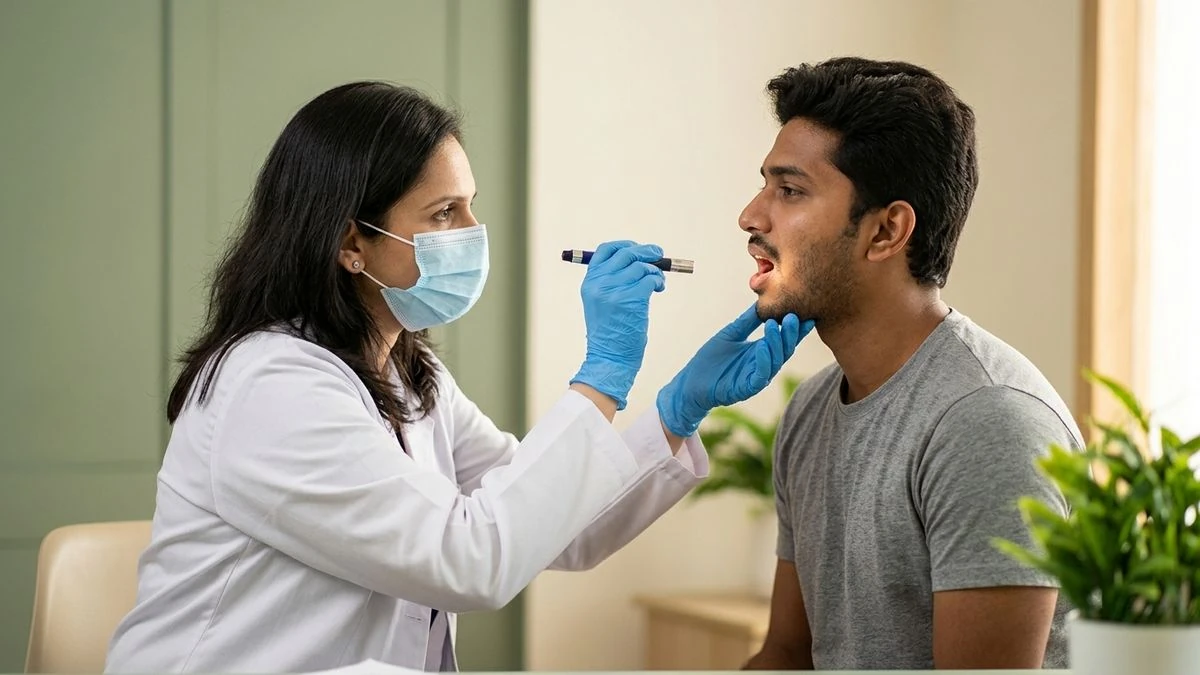
Oral cancer found early is a far smaller operation than oral cancer found late. That is the whole reason screening exists. A screening appointment is a careful examination of the mouth — looking at the lining, and feeling for lumps or areas of thickening you cannot see. Our oral cancer screening and self-exam guide shows what we check and how to examine your own mouth between visits.
You should be screened regularly if you use tobacco in any form, drink heavily, or have already been diagnosed with an oral potentially malignant disorder — the risk from gutka and pan masala is particularly high in Tamil Nadu. If you have noticed an ulcer that has not healed in three weeks, a white or red patch, a lump, or your mouth is not opening as wide as it used to, do not wait for a routine appointment. The early warning signs of oral cancer are worth knowing in detail.
Dr. Kalpa Pandya has extensive experience in managing OPMD — conditions such as leukoplakia and oral submucous fibrosis (OSMF) that can turn into cancer if they are left alone. Treating them early can stop that progression before invasive cancer ever develops.
Surgical Procedures for Oral Cancer
Which operation you need depends on where the cancer is and how far it has spread — our guide to oral cancer stages explains what your stage means for treatment. The aim is always the same: remove all of it, with a clear margin of healthy tissue around it, while taking as little as possible of what lets you eat, swallow and speak. Patients often ask whether oral cancer can be treated without surgery; for most oral cavity cancers surgery remains the primary treatment.
These are the operations we perform — each links to a page explaining what it involves and what recovery looks like:
Wide local excision: removing the tumour with a margin of healthy tissue around it. We check those margins on frozen section while you are still in theatre, so we know before you wake up that the cancer is fully out.
Glossectomy: removing part of the tongue (partial or hemi) or all of it (total), depending on how far the cancer has spread.
Mandibulectomy: removing part of the lower jaw — marginal if only the surface is involved, segmental if the cancer has gone into the bone.
Maxillectomy: removing part or all of the upper jaw, reconstructed with an obturator or a flap.
Composite resection (commando): a single-stage operation removing the tumour, the involved jaw bone and the neck nodes together, then rebuilding.
Neck dissection: removing the lymph nodes in the neck that oral cancer spreads to first — selective, modified radical or radical, depending on what the scans and the nodes show.
Salvage surgery: surgery for cancer that has come back after previous treatment such as radiation.
Reconstruction After Oral Cancer Surgery
Removing the cancer is half the operation. Rebuilding what was removed — in the same sitting, wherever possible — is what decides whether you can eat a normal meal and be understood on the phone a year from now. Reconstruction is planned before we ever start, not decided afterwards.
Local and regional flaps: rebuilding the defect with tissue moved from nearby.
Free flaps: transferring tissue from elsewhere in the body — an anterolateral thigh (ALT) flap, a deep circumflex iliac artery (DCIA) flap, or a pectoralis major myocutaneous (PMMC) flap — and reconnecting the blood vessels under a microscope.
Which method suits you depends on the size and site of the defect and on your general health. What we are optimising for is the best function and appearance we can give you, not the quickest operation.
What to Expect During and After Oral Cancer Treatment
Nothing is scheduled until we know exactly what we are treating. That means imaging (CT, MRI) to see how far the cancer extends, and a biopsy to confirm what it is — our guide to biopsy and staging walks through what happens at each step. Only then do we sit down with you, explain the options, and agree a plan that takes your circumstances and your priorities into account. If cost is on your mind, we set out the factors behind oral cancer treatment cost in Chennai openly.
Recovery does not end when you leave hospital. You may need speech and swallowing therapy, help with nutrition, and pain management — and you will need regular follow-up so that anything coming back is caught early. Both surgeons stay with you through all of it, and life after tongue cancer surgery describes what that recovery realistically looks like.
If you want a second view before committing to surgery, that is a reasonable thing to want. We offer a second opinion, including remote video consultations for patients outside Chennai. You may also find our oral cancer surgery FAQs useful — the questions patients ask us most, answered in one place.
Explore oral cancer care
Your complete pathway — by stage of the journey and by site of the cancer.
Oral cancer, or mouth cancer, includes cancers affecting the lips, tongue, cheeks, floor of the mouth, hard and soft palate, sinuses, and pharynx. It often starts as a painless sore or growth. Risk factors include tobacco and alcohol use, HPV infection, and poor oral hygiene. Early detection is key for successful treatment.
How is oral cancer treatment in Chennai diagnosed?
Diagnosis involves a physical exam, including visual inspection and palpation. Biopsies confirm the presence of cancerous cells. Imaging (CT, MRI) assesses the cancer's extent. At Mouth Cancer Surgeons, Dr. Pradeep S. and Dr. Kalpa Pandya use advanced techniques for accurate diagnosis and staging.
What are the treatment options for oral cancer?
Treatment options include surgery, radiation therapy, chemotherapy, targeted therapy, and immunotherapy. Surgery often involves removing the tumour and affected lymph nodes. Reconstruction may be needed to restore function and appearance. Treatment plans are individualized based on the cancer's stage and location.
How is glossectomy performed?
Glossectomy involves removing part or all of the tongue. Partial glossectomy removes a small portion, while total glossectomy removes the entire tongue. Reconstruction techniques, such as flaps, help restore function. Speech therapy is often needed post-surgery to improve speech and swallowing.
What are the risks and side effects of oral cancer surgery?
Risks include bleeding, infection, swelling, nerve damage, and difficulty with speech or swallowing. Side effects vary depending on the extent of surgery. Reconstruction can minimize functional deficits. Dr. Pradeep S. and Dr. Kalpa Pandya take steps to mitigate these risks.
Where can I get oral cancer screening in Chennai?
Mouth Cancer Surgeons, led by Dr. Pradeep S. and Dr. Kalpa Pandya, offer comprehensive oral cancer screening in Chennai. They consult at Apollo Main Hospital on Greams Road. Regular screening is crucial for early detection, especially for high-risk individuals.
How much does oral cancer treatment cost in Chennai?
The cost of oral cancer treatment varies depending on the stage, location, and treatment plan. Surgery, radiation, and chemotherapy contribute to the overall expense. Consultations with Dr. Pradeep S. and Dr. Kalpa Pandya can provide a detailed cost estimate based on individual needs.
What is the recovery time after oral cancer surgery?
Recovery time varies depending on the extent of surgery and reconstruction. Initial recovery may take several weeks, with ongoing rehabilitation. Speech and swallowing therapy aid in regaining function. Regular follow-up appointments are essential for monitoring and support.
Oral Cancer Surgery in Chennai
Mouth Cancer Surgeons, led by Dr. Pradeep S. and Dr. Kalpa Pandya, provide comprehensive oral cancer care to patients across Chennai and Tamil Nadu. They consult at Apollo Main Hospital on Greams Road, ensuring accessible and expert treatment for oral cancer and related conditions.
Concerned about oral cancer surgery?
Request a consultation and choose your preferred hospital. Enquiries are triaged and you are directed to the most suitable surgeon and hospital.