Speech & Swallowing After Oral Surgery: Recovery Guide
Need expert consultation? Book an appointment with Dr. Pradeep S. or Dr. Kalpa Pandya.
Book AppointmentUndergoing major oral or head and neck surgery can be a life-changing event. While the primary focus of surgery is often removing a disease or reconstructing damaged tissues, restoring daily functions like talking and eating is vital to your quality of life. Understanding speech and swallowing therapy after oral surgery what to expect is one of the most crucial steps in preparing for your recovery.
Whether you are preparing for oral cancer surgery or recovering from jaw reconstruction, the way you speak and swallow will change temporarily. These changes happen because the muscles, nerves, and structural contours of your mouth are altered during the procedure. Fortunately, targeted rehabilitation can help you adapt, heal, and reclaim these essential functions.
At Mouth Cancer Surgeons in Chennai, Dr. Pradeep S. and Dr. Kalpa Pandya emphasize that surgery is only the first step. True recovery requires a dedicated, multidisciplinary approach. In this guide, we will detail what to expect during your speech and swallowing rehabilitation, how these therapies work, and how our team supports you every step of the way. For the full recovery pathway — speech, nutrition, dental work and surveillance — see oral cancer recovery and rehabilitation. For a month-by-month surgical recovery map, see our oral cancer surgery recovery timeline. For feeding-tube weaning and Chennai MDT logistics, see speech and swallowing rehab after oral cancer.
Why Oral Surgery Impacts Speech and Swallowing
The human mouth is a highly coordinated instrument. Speaking and swallowing require the precise, rapid coordination of dozens of muscles, bones, cartilages, and nerves.
When a surgeon operates on the tongue, jaw, palate, or cheek, these coordinated movements are disrupted. The degree of disruption depends largely on the location and extent of the surgery:
-
Tongue Resections (Glossectomy): The tongue is the primary organ for articulating speech sounds (especially consonants like t, d, s, z) and pushing food toward the back of the throat. Even a partial glossectomy changes how the tongue interacts with the teeth and palate.
-
Jaw Resections (Mandibulectomy or Maxillectomy): Removing portions of the upper or lower jaw alters the alignment of your bite and the structural support of your lips and cheeks, making chewing and seal formation difficult.
-
Reconstructive Flaps: While reconstructive & restorative surgery using microvascular free flaps (such as tissue from the forearm or thigh) restores the physical volume of the mouth, these flaps do not initially have the same muscle movement or sensation as the original tissue.
-
Nerve Alterations: Surgical manipulation can temporarily stun or permanently affect the cranial nerves (such as the hypoglossal or facial nerves) that control tongue movement and facial expressions.
Understanding these structural changes helps demystify why swallowing and speaking feel different after your procedure. It is not a sign of permanent failure, but rather a new anatomical layout that your brain and muscles must learn to navigate.
Speech and Swallowing Therapy After Oral Surgery: What to Expect in the Early Stages
The immediate post-operative phase is focused on healing, managing swelling, and ensuring safety. Here is what you can expect during the first few days and weeks after surgery.
The Immediate Post-Operative Window (Days 1 to 7)
In the first few days, your mouth will be swollen, and you may have surgical drains or packing in place. During this time, direct swallowing is usually paused to allow the surgical wounds to heal without irritation or risk of infection.
To maintain nutrition and hydration, you may have a temporary feeding tube, such as a Nasogastric (NG) tube passing through your nose into your stomach, or a Percutaneous Endoscopic Gastrostomy (PEG) tube placed directly into your stomach. This is a standard preventive measure, especially after complex multidisciplinary oncology care procedures.
The Initial Bedside Evaluation
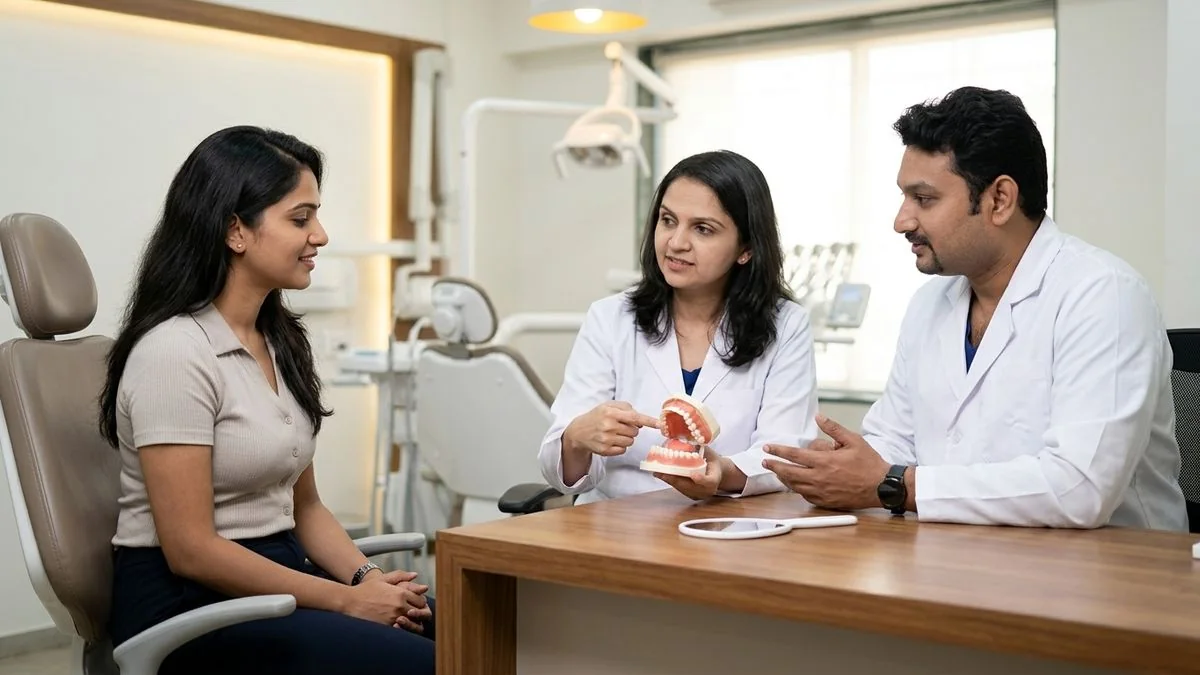
Before you are allowed to drink or eat anything by mouth, a Speech-Language Pathologist (SLP) will perform a bedside swallow evaluation. This usually happens once your surgical team, led by Dr. Pradeep S. and Dr. Kalpa Pandya, confirms that your tissue healing is stable.
During this evaluation, the therapist will:
-
Assess your ability to manage your own saliva.
-
Check your cough reflex and throat-clearing ability.
-
Observe how you handle very small sips of water or spoonfuls of pureed food.
-
Listen to your voice quality after swallowing to check for signs of "wetness," which can indicate that liquid has slipped toward your airway.
If there are concerns about silent aspiration (food or liquid entering the lungs without causing coughing), the team may recommend an objective imaging study, such as a Modified Barium Swallow Study (MBSS) or a Fiberoptic Endoscopic Evaluation of Swallowing (FEES).
The Core Components of Swallowing Rehabilitation
Swallowing occurs in three distinct phases: the oral phase (chewing and moving food to the back of the mouth), the pharyngeal phase (the throat squeeze that pushes food down while closing the airway), and the esophageal phase (food traveling to the stomach). Oral surgery primarily impacts the oral and pharyngeal phases.
Swallowing therapy focuses on two main strategies: compensatory techniques (immediate safety measures) and rehabilitative exercises (long-term muscle rebuilding).
1. Compensatory Techniques and Postures
These are immediate adjustments you can make to swallow safely, even if your muscles are still weak.
-
The Chin-Tuck Maneuver: Tucking your chin toward your chest before swallowing helps widen the space at the back of your throat and keeps the airway closed, preventing liquids from entering the lungs.
-
Head Rotation or Tilt: Tilting your head to one side can help direct food down the stronger, undamaged side of your throat.
-
Supraglottic Swallow: A technique where you hold your breath, swallow, and then immediately cough. This clears any food or liquid that might have gathered near your vocal cords.
2. Rehabilitative Exercises
These exercises are designed to rebuild muscle strength, improve range of motion, and enhance coordination over time.
-
The Mendelsohn Maneuver: This exercise involves holding your larynx (voice box) in its elevated position for a few seconds mid-swallow. This helps keep the upper esophageal sphincter open longer, allowing food to pass through more easily.
-
The Masako Maneuver (Tongue-Hold Swallow): You gently hold the tip of your tongue between your teeth and swallow. This forces the muscles at the back of your throat to squeeze harder to meet the tongue.
-
Shaker Exercises: Head-lifting exercises performed while lying flat on your back. This strengthens the neck muscles that help open the upper esophagus during swallowing.
-
Effortful Swallow: Squeezing all of your swallowing muscles as hard as you can while swallowing, which improves the tongue’s push and throat coordination.
Speech Rehabilitation: Restoring Communication
Regaining clear speech after oral surgery requires patience and targeted practice. The goal of speech therapy is not necessarily to make your mouth move exactly as it did before, but to help you achieve functional, intelligible communication.
Overcoming Articulation Challenges
The tongue, lips, and teeth work together to shape sound. When these structures change, certain sounds become difficult to produce.
-
Vowel Sounds: Usually easier to recover, though they may sound slightly nasal if the palate was involved.
-
Consonants: Sounds like t, d, n, l, s, and z require precise tongue-tip elevation. Sounds like p, b, and m require firm lip closure. Your therapist will guide you through repetitive drills to find new ways to produce these sounds using your remaining tissues or reconstructive flap.
Key Strategies for Clearer Speech
-
Slowing Your Rate of Speech: Speaking slowly gives your brain and muscles more time to coordinate the necessary movements.
-
Over-Articulation: Exaggerating your mouth movements and opening your mouth wider can significantly improve how well others understand you.
-
Breath Support: Learning to speak on a steady exhale ensures your voice has enough volume and clarity.
-
Alternative Communication Tools: In the very early stages of recovery, using writing pads, text-to-speech mobile apps, or communication boards can reduce frustration and allow your mouth to rest.
Timeline of Speech and Swallowing Recovery
Recovery is a gradual process that varies from patient to patient. Below is a general timeline of what to expect during your rehabilitation.
| Recovery Phase | Typical Focus Areas | Expected Milestones |
|---|---|---|
| Week 1 - 2 | Wound healing, swelling reduction, saliva management, alternative feeding (NG/PEG). | Initial bedside swallow evaluation; introduction of gentle range-of-motion exercises. |
| Week 3 - 6 | Gradual transition to soft or pureed foods; basic articulation drills; airway protection techniques. | Safe swallowing of pureed foods; improved lip and jaw movement; basic speech clarity for daily needs. |
| Month 2 - 4 | Advanced muscle strengthening; introducing more challenging food textures; refining speech sounds. | Removal of feeding tubes (in most cases); ability to eat a soft mechanical diet; high speech intelligibility with family. |
| Month 6+ | Long-term maintenance; adaptation to permanent structural changes; integration of dental prostheses. | Near-normal swallowing safety; successful adaptation to a regular or near-regular diet; comfortable communication in public. |
Note: For patients undergoing adjuvant therapies like radiation or chemotherapy, this timeline may stretch, as radiation can cause temporary dryness (xerostomia) and muscle stiffness (trismus).
The Role of Reconstructive Surgery and Dental Rehabilitation
Successful speech and swallowing recovery relies heavily on the quality of the initial surgical reconstruction. A well-planned reconstruction provides the physical foundation that makes therapy effective.
During your surgery, Dr. Pradeep S. focuses on microvascular reconstruction. By carefully shaping free tissue flaps (such as a radial forearm flap to reconstruct a tongue, or a fibula flap to reconstruct a jaw), he ensures that the mouth retains the volume, mobility, and shape necessary for speech and swallowing.
Following this, Dr. Kalpa Pandya leads the restorative phase. If teeth were removed during tumor resection, she coordinates dental implants & pre-prosthetic surgery. Restoring your teeth is not just about your smile; it is essential for:
-
Providing a surface for the tongue to press against during speech.
-
Allowing you to chew solid foods effectively.
-
Maintaining the structural height of your face, which supports natural jaw movement.
This seamless integration of advanced surgical reconstruction and dental rehabilitation is a core advantage of our dual-surgeon model.
[Surgical Resection] ➔ [Microvascular Reconstruction (Dr. Pradeep S.)]

                                 ↓

[Early Speech & Swallowing Assessment (Within 2 Weeks)]

                                 ↓

[Active Rehabilitation & Exercises (Weeks 3 to 12)]

                                 ↓

[Dental & Implant Rehabilitation (Dr. Kalpa Pandya)] ➔ [Long-Term Functional Recovery]
Practical Tips for Patients and Caregivers at Home
Rehabilitation does not stop when you leave the clinic. Daily practice and supportive home care are essential for steady progress.
1. Managing Food Textures Safely
-
Keep it Moist: Dry foods are incredibly difficult to swallow after oral surgery. Use gravies, broths, sauces, or yogurt to moisten every bite.
-
Use a Blender: Invest in a high-quality blender to prepare nutrient-dense smoothies, pureed soups, and soft meals.
-
Avoid High-Risk Foods: Stay away from sticky foods (like white bread or peanut butter), crumbly foods (like dry crackers), and foods with mixed consistencies (like soup with large, hard chunks).
2. Creating a Safe Eating Environment
-
Minimize Distractions: Turn off the television and avoid talking while chewing. Focus entirely on the mechanics of safe swallowing.
-
Sit Upright: Always sit at a 90-degree angle during meals, and remain upright for at least 30 to 45 minutes after eating to prevent reflux or aspiration.
-
Take Small Bites: Use a teaspoon to control portion sizes, and ensure your mouth is completely clear before taking the next bite.
3. Staying Consistent with Exercises
-
Practice Daily: Just like physical therapy for a knee or shoulder, speech and swallowing muscles require daily, repetitive exercise to rebuild strength.
-
Stay Patient: Progress can feel slow, especially during weeks when you face fatigue or dryness. Celebrate small victories, such as drinking a glass of water without coughing or speaking a clear sentence on the first try.
If you are experiencing persistent difficulties with swallowing or speech after a procedure, early intervention is highly beneficial. Book an appointment with Dr. Pradeep S. and Dr. Kalpa Pandya at Apollo Main Hospital, Greams Road, Chennai.
Why Choose Mouth Cancer Surgeons, Chennai?
At Mouth Cancer Surgeons, we believe that successful surgery is measured not just by removing a disease, but by how well you live afterward.
Our practice is built on a unique dual-surgeon model. Dr. Pradeep S. and Dr. Kalpa Pandya review every case together, ensuring that your surgical plan is optimized for both oncological safety and functional recovery from day one.
-
Comprehensive Care: From your initial diagnosis through reconstructive surgery, dental rehabilitation, and long-term speech and swallowing surveillance, you are cared for by the same two highly experienced surgeons.
-
Expert Collaborations: We work closely with leading Speech-Language Pathologists, clinical dietitians, and physical therapists at Apollo Main Hospital (Greams Road) and Sri Ramachandra Medical Centre (Porur) to deliver a seamless recovery experience.
-
Patient-Centric Approach: We understand the emotional and physical challenges of recovering your voice and your ability to eat. Our team provides compassionate, step-by-step guidance tailored to your specific surgical journey.
If you or a loved one is preparing for oral surgery, or if you are seeking expert guidance on post-surgical rehabilitation, we are here to help.
References
-
National Comprehensive Cancer Network (NCCN). "Clinical Practice Guidelines in Oncology: Head and Neck Cancers." NCCN Guidelines, 2024. https://www.nccn.org
-
Lazarus, Logemann, et al. "Swallowing and Speech Function After Anterior Tongue and Floor of Mouth Resection." Journal of Speech, Language, and Hearing Research, 2018.
-
World Health Organization. "Rehabilitation After Head and Neck Cancer Surgery." WHO Action Plan, 2022.
-
American Speech-Language-Hearing Association (ASHA). "Speech and Swallowing Disorders Related to Head and Neck Cancer." ASHA Practice Portal, 2023. https://www.asha.org
-
National Institute of Dental and Craniofacial Research. "Oral Complications of Cancer Treatment: What the Oncology Team Can Do." NIDCR, 2023.
Next step
Concerned about a symptom you read here? Get a specialist opinion in Chennai.
Dr. Pradeep S. and Dr. Kalpa Pandya consult at Apollo Hospitals, Greams Road. Same-day responses on WhatsApp for most enquiries.
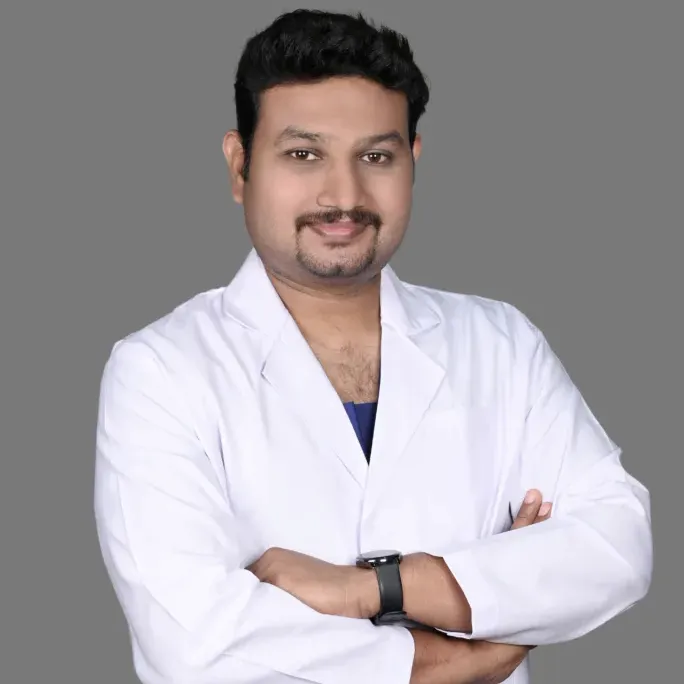
Dr. Pradeep S.
MDS (OMFS) · FHNS · FIBCSOMS
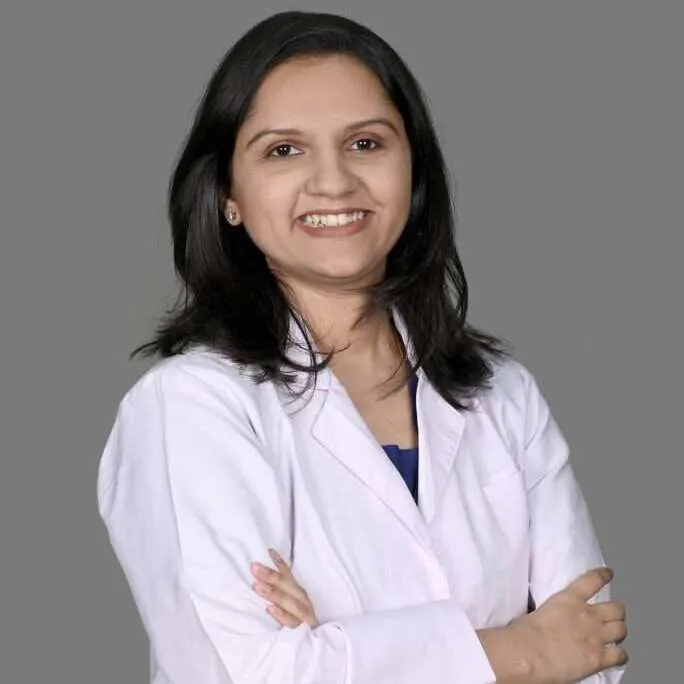
Dr. Kalpa Pandya
MDS (OMFS) · FHNS — Head & Neck Oncology
Authored by
Medically reviewed by