Oral Cancer Treatment Cost in Chennai: Price Factors
Need expert consultation? Book an appointment with Dr. Pradeep S. or Dr. Kalpa Pandya.
Book AppointmentReceiving a diagnosis of oral cancer brings a wave of emotional and physical challenges. Alongside concerns about health and recovery, families face immediate questions about financial planning. Understanding what oral cancer treatment costs in Chennai — and what drives the price up or down — is essential for patients and caregivers trying to make informed healthcare decisions.
Chennai has established itself as a premier destination for oncology care across South India. With world-class infrastructure, highly trained oral and maxillofacial oncologists, and advanced reconstructive capabilities, the city offers clinical outcomes on par with international standards. However, because oral cancer treatment is highly personalized, there is no single "flat rate" for care.
In our practice at Mouth Cancer Surgeons, led by Dr. Pradeep S. and Dr. Kalpa Pandya, we believe that clinical excellence must go hand-in-hand with financial transparency. This comprehensive guide breaks down the various cost components of mouth cancer therapy in Chennai, explaining why prices vary and how you can plan your financial roadmap.
What is the Average Oral Cancer Treatment Cost in Chennai?
The overall cost of treating oral cavity cancer (which includes the tongue, buccal mucosa, floor of the mouth, lower or upper jaw, palate, and lips) varies widely. Depending on whether a patient requires simple surgical excision or a combination of major resection, microvascular jaw reconstruction, radiation, and chemotherapy, the total expenditure can range significantly.
The table below outlines the estimated cost brackets for different stages of oral cancer treatment in Chennai. These figures represent typical hospital and surgical charges and serve as a general baseline.
| Treatment Category | Clinical Scenario | Estimated Cost Range (INR) |
|---|---|---|
| Early Stage (Stage I / II) | Localized surgical excision of the tumor, minimal or no reconstruction, short hospital stay (3–5 days). | ₹2,00,000 – ₹3,50,000 |
| Intermediate Stage (Stage II / III) | Tumor resection, neck dissection (lymph node removal), local or regional flap reconstruction, hospital stay (5–8 days). | ₹3,50,000 – ₹5,50,000 |
| Advanced Stage (Stage III / IV) | Composite resection (bone + soft tissue), neck dissection, microvascular free flap reconstruction (e.g., free fibula), ICU stay, hospital stay (10–14 days). | ₹5,50,000 – ₹8,50,000+ |
| Adjuvant Radiotherapy | Post-operative radiation therapy (typically 30–33 cycles over 6 weeks) to eliminate residual microscopic disease. | ₹1,50,000 – ₹3,50,000 |
| Adjuvant Chemotherapy | Systemic chemotherapy cycles (often administered alongside radiation for advanced cases). | ₹1,00,000 – ₹2,50,000 |
Note: These ranges are indicative. Accurate pricing can only be determined after a thorough clinical evaluation and staging by a qualified surgical oncologist.
If you are noticing early warning signs such as persistent non-healing ulcers or unusual white patches, seeking timely evaluation is critical. Read our detailed guide on how to identify if a mouth ulcer is cancerous to understand early symptoms that warrant immediate attention.
Oral Cancer Treatment Cost in Chennai: What Affects the Price?
To understand why two patients with the same diagnosis might have different final bills, we must look at the specific variables that dictate the complexity of the treatment plan. The primary driver of cost is not the hospital name alone, but the precise clinical requirements of the patient's disease.
1. Preoperative Diagnostic Workup and Staging
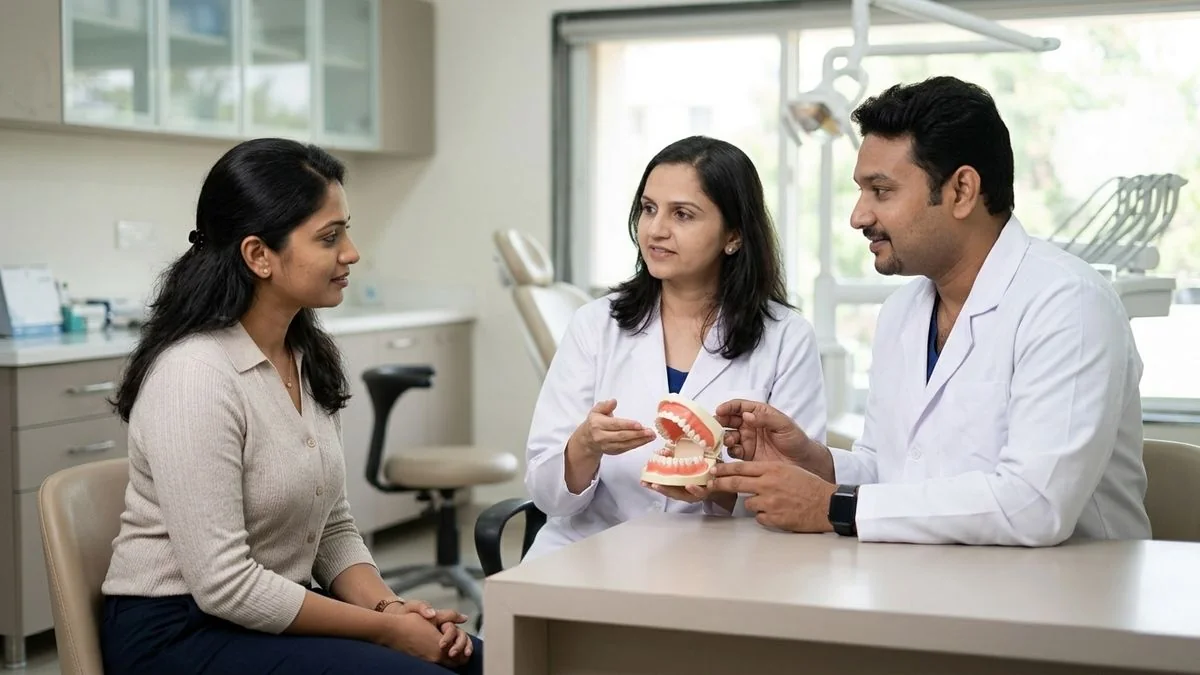
Before any treatment begins, a precise diagnosis and staging map are required. These diagnostic steps ensure that the surgical team does not under-treat or over-treat the disease.
-
Biopsy and Histopathology: Confirms the presence of malignancy and identifies the specific cell type (usually squamous cell carcinoma). (Cost: ₹3,000 – ₹8,000).
-
Contrast-Enhanced CT (CECT) or MRI: Helps determine the depth of tumor invasion and whether it has spread to adjacent structures or lymph nodes. (Cost: ₹8,000 – ₹15,000).
-
PET-CT Scan: Often recommended for advanced stages to rule out distant metastasis (spread to lungs, liver, or bones). (Cost: ₹18,000 – ₹25,000).
2. Tumor Stage and Anatomical Location
The site of the tumor within the oral cavity dictates the surgical approach.
-
Buccal Mucosa (Inner Cheek) & Tongue: These are the most common sites of oral cancer in India due to smokeless tobacco use. Early-stage tongue cancers may only require a partial glossectomy. Advanced cases may require a near-total glossectomy, which demands highly complex reconstruction to preserve speech and swallowing.
-
Alveolus and Jawbone: If the cancer has invaded the lower jaw (mandible) or upper jaw (maxilla), a bone resection (mandiblectomy or maxillectomy) is required. Removing bone immediately escalates the surgical complexity and the cost, as the jaw must be structurally rebuilt.
3. Neck Dissection (Management of Lymph Nodes)
Oral cancers frequently spread to the lymph nodes in the neck. Even if no nodes appear enlarged on a scan, a preventive or therapeutic "neck dissection" is often performed to remove lymph nodes at risk.
-
Selective Neck Dissection: Removes specific node groups, adding moderate time and cost to the surgery.
-
Modified Radical Neck Dissection: A more extensive clearance required when lymph nodes are clinically involved, requiring meticulous dissection around major blood vessels and nerves.
Reconstructive Surgery: The Key Cost Driver
In modern oral oncology, removing the cancer is only half the battle. The second, equally critical phase is reconstruction. When a surgeon removes a portion of the tongue, cheek, or jaw, the resulting defect must be repaired to restore function (breathing, chewing, swallowing, speaking) and appearance.
The choice of reconstructive technique is one of the most significant variables in the final cost.
Local and Regional Flaps (Lower Cost)
For smaller defects, local tissues or regional flaps (such as the temporalis myofascial flap or the pectoralis major myocutaneous flap - PMMC) are used. These flaps have a reliable blood supply and do not require connecting blood vessels under a microscope.
- Cost Impact: Keeps the overall surgical and operating theatre (OT) time shorter (typically 3 to 5 hours total), reducing anesthesia and ICU costs.
Microvascular Free Flaps (Higher Cost)
For large defects, especially those involving bone loss, microvascular free tissue transfer is the gold standard. This involves harvesting tissue (skin, muscle, and bone) from another part of the patient's body—such as the leg (fibula free flap), forearm (radial forearm free flap), or thigh (ALT flap)—and transplanting it to the face.
The surgeon must use an operating microscope to stitch tiny blood vessels (often less than 2mm in diameter) in the neck to the blood vessels of the flap to establish blood flow.
- Cost Impact: Microvascular reconstruction requires highly specialized microsurgical instruments, operating microscopes, disposable micro-clamps, and extended operating theatre time (often 8 to 12 hours). It also requires a dedicated post-operative ICU stay with specialized nursing care to monitor flap viability every hour. This advanced care naturally increases the overall treatment cost.
To understand more about how these complex reconstructive surgeries are planned and executed to restore facial form and function, visit our dedicated section on reconstructive and restorative surgery.
Non-Surgical Treatment Costs and Adjuvant Therapies
For many patients, surgery is only the first phase of a comprehensive treatment plan. Based on the final biopsy report (which evaluates tumor margins, lymph node involvement, and perineural invasion), a multidisciplinary tumor board may recommend adjuvant therapies.
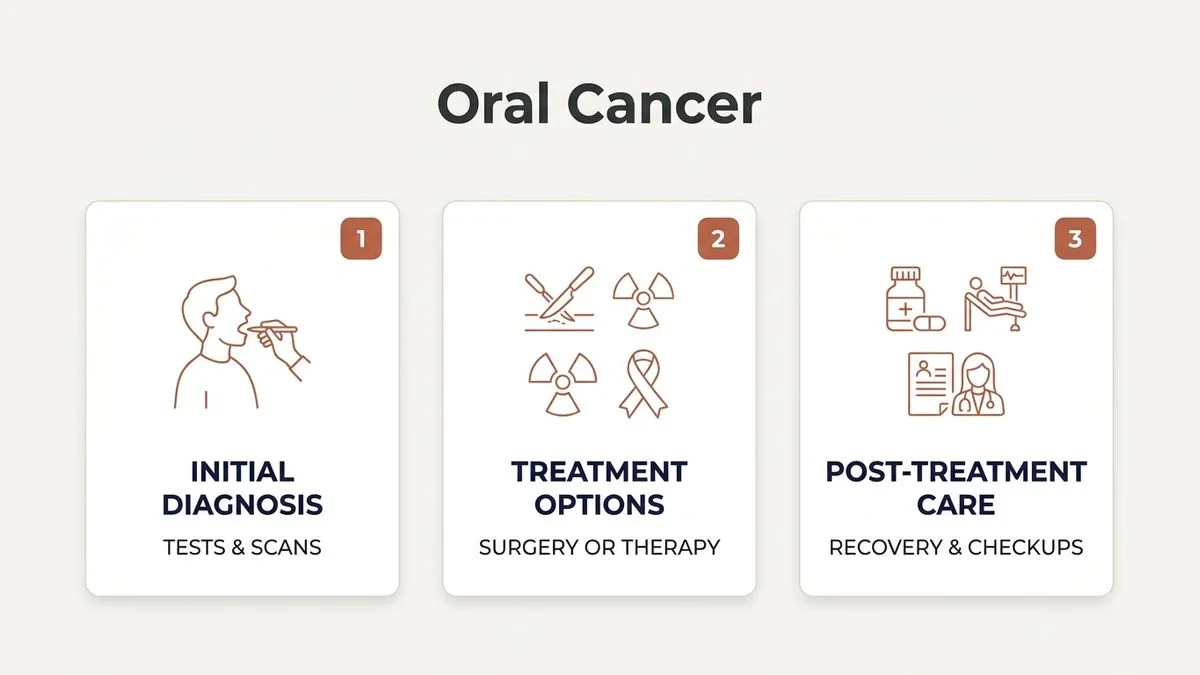
[Diagnostic Workup] ➔ [Surgical Resection] ➔ [Reconstruction] ➔ [Adjuvant Therapy (Radiation/Chemo)]
Radiation Therapy (Radiotherapy)
Radiotherapy uses high-energy beams to destroy any remaining microscopic cancer cells.
-
IMRT (Intensity-Modulated Radiation Therapy) / VMAT: These advanced techniques precisely target the tumor site while sparing salivary glands and healthy tissues. (Cost: ₹1,50,000 – ₹3,00,000 for a full course).
-
Proton Therapy: Available at specialized centers like the Apollo Proton Cancer Centre in Chennai, this highly advanced form of radiation minimizes side effects but carries a significantly higher price tag.
Chemotherapy and Targeted Therapy
Chemotherapy drugs are administered systemically to destroy cancer cells. When combined with radiation (chemoradiation), it enhances the effectiveness of the treatment.
-
Standard Chemotherapy: Relatively affordable, with costs depending on the specific drugs used and the number of cycles.
-
Targeted Therapy & Immunotherapy: Advanced drugs (such as monoclonal antibodies or checkpoint inhibitors) target specific pathways in cancer cells. While highly effective in select cases, these drugs can add several lakhs to the treatment budget.
Learn more about how these different treatment modalities are integrated into a cohesive, patient-centric plan on our multidisciplinary cancer care page.
Hospital-Related Cost Factors
Beyond the surgical and medical fees, the choice of hospital infrastructure plays a major role in the final billing. Chennai offers a spectrum of healthcare facilities, from government-aided institutions to premium quaternary care corporate hospitals.
1. Room Category and General Ward Options
The cost of almost all hospital services—including operating theatre charges, nursing fees, and resident doctor visits—is scaled according to the room category chosen by the patient.
-
General Ward: Most economical, making treatment highly accessible.
-
Semi-Private / Private Rooms: Provide more comfort and privacy for the patient and caregiver but increase the daily room rent and associated service charges.
-
Deluxe / Suite Rooms: High-end amenities with premium pricing.
2. Intensive Care Unit (ICU) Stay
Patients undergoing major resections and microvascular reconstructions typically spend the first 24 to 72 hours in a specialized ICU or high-dependency unit (HDU). The cost of an ICU bed, continuous monitoring, specialized nursing, and supportive care (ventilators, arterial lines) is higher than ward charges.
3. Length of Hospital Stay
A straightforward oral cancer surgery without microvascular reconstruction may require a stay of 4 to 6 days. In contrast, a patient undergoing complex jaw reconstruction with a free fibula flap may need to remain hospitalized for 10 to 14 days to ensure the flap is fully stable and the patient can swallow safely. Each additional day in the hospital adds to the room rent, medications, and nursing charges.
The Value of the Dual-Surgeon Model: Dr. Pradeep S. & Dr. Kalpa Pandya
When evaluating the cost of care, it is vital to consider clinical efficiency. At Mouth Cancer Surgeons, we operate on a unique, highly collaborative Two-Surgeon Model.
Both Dr. Pradeep S. (Super-specialty head & neck surgical oncologist) and Dr. Kalpa Pandya (Consultant Oral & Maxillofacial Surgeon) personally evaluate, plan, and operate on every patient together. This dual-surgeon approach offers distinct clinical and financial advantages:
-
Reduced Operating Time: During a complex reconstruction case, Dr. Pradeep S. can focus on removing the cancer and clearing the lymph nodes in the neck, while Dr. Kalpa Pandya simultaneously harvests the reconstructive flap from the leg or arm. This parallel processing can reduce total operating room time by 2 to 3 hours.
-
Lower Anesthesia & OT Charges: Since operating theatre charges are billed on an hourly basis, reducing surgery time directly translates into lower OT bills and reduced anesthesia medication costs.
-
Minimized Complication Rates: Shorter operating times mean less physiological stress on the patient, lowering the risk of post-operative complications, reducing the length of the ICU stay, and minimizing overall hospital bills.
-
Comprehensive Rehabilitation: Dr. Kalpa Pandya’s expertise in dental implantology and maxillofacial rehabilitation ensures that the reconstruction is planned with the final teeth in mind, preventing costly, unplanned secondary corrective surgeries later.
If you are facing a new diagnosis or seeking a second opinion on a planned surgery, a joint consultation can help clarify your options. You can easily book a consultation with both surgeons at Apollo Main Hospital, Greams Road, Chennai.
Post-Treatment Rehabilitation and Long-Term Surveillance
A successful surgery is just the first step. True recovery means returning to a normal life, which requires functional rehabilitation. These post-operative phases carry their own financial considerations.
-
Speech and Swallow Therapy: Essential for patients who have had surgery on the tongue or palate. This therapy helps patients regain the ability to speak clearly and swallow safely, reducing the risk of aspiration pneumonia.
-
Dental Implants and Prosthetics: Patients who lose teeth or portions of their jawbone during cancer removal will eventually require dental implants or specialized obturators to chew properly. Dr. Kalpa Pandya leads our dental implant rehabilitation, ensuring that patients can transition back to a normal diet. Learn more about post-cancer dental rehabilitation on our dental implants page.
-
Surveillance and Follow-up Care: Oral cancer requires strict monitoring to detect any signs of recurrence early. Follow-up visits are typically scheduled every 1 to 3 months in the first year, gradually becoming less frequent over five years. These visits involve clinical exams and occasional imaging scans.
Navigating Insurance and Financial Planning in Chennai
Managing the cost of cancer care requires active financial planning. Fortunately, there are multiple avenues available to help patients manage these expenses at premier institutions like Apollo Main Hospital, Greams Road, Chennai.
Commercial Health Insurance and TPAs
Most comprehensive health insurance policies cover oral cancer surgeries, hospital stays, and reconstructive procedures.
-
Pre-Authorisation: It is crucial to submit a pre-authorisation request to your Third-Party Administrator (TPA) at least 3 to 4 days before a planned surgery.
-
Exclusions: While surgery and room rent are largely covered, some consumables, robotic surgical surcharges, or advanced targeted drugs may have limited coverage depending on your specific policy terms.
Government and Corporate Schemes
Many public sector undertakings (PSUs), corporate employers, and state government schemes provide comprehensive cashless cancer care. Our team at Apollo Main Hospital helps guide families through the necessary documentation to secure approvals from these panels.
Clinical Perspectives: Making the Right Decisions
In our years of treating oral cancer, we have seen that trying to cut costs by delaying surgery or choosing suboptimal surgical margins almost always leads to disease recurrence. Treating a recurrence is clinically far more challenging and financially much more burdensome than performing a definitive, successful first surgery.
When planning your care:
-
Prioritize the First Surgery: The first surgical attempt offers the best window for a complete cure. Ensure it is performed by a dedicated head & neck surgical oncology team.
-
Demand Transparency: Ask your surgical team for a detailed, itemized estimate that accounts for potential ICU stays, blood transfusions, and reconstructive needs.
-
Focus on Rehabilitation: A cheaper surgery that leaves a patient unable to speak or swallow is not a successful outcome. Factor the cost of reconstruction and rehabilitation into your decision-making.
References
-
National Comprehensive Cancer Network (NCCN). "NCCN Clinical Practice Guidelines in Oncology: Head and Neck Cancers." NCCN Guidelines, 2024. https://www.nccn.org
-
Indian Council of Medical Research (ICMR). "Consensus Document for Management of Buccal Mucosa Cancer." ICMR Guidelines, 2020.
-
Kazi, M., et al. "Financial Burden of Oral Cancer Treatment on Patients and Families in India." Indian Journal of Cancer, 2021.
-
Nayak, S., et al. "Cost-Effectiveness of Microvascular Reconstruction in Head and Neck Oncology: An Indian Perspective." Journal of Maxillofacial and Oral Surgery, 2022.
-
World Health Organization (WHO). "Cancer Prevention and Control: Oral Cavity Malignancies." WHO Technical Report Series, 2023.
Next step
Concerned about a symptom you read here? Get a specialist opinion in Chennai.
Dr. Pradeep S. and Dr. Kalpa Pandya consult at Apollo Hospitals, Greams Road. Same-day responses on WhatsApp for most enquiries.
Dr. Pradeep S.
MDS (OMFS) · FHNS · FIBCSOMS

Dr. Kalpa Pandya
MDS (OMFS) · FHNS — Head & Neck Oncology
Authored by
Medically reviewed by